
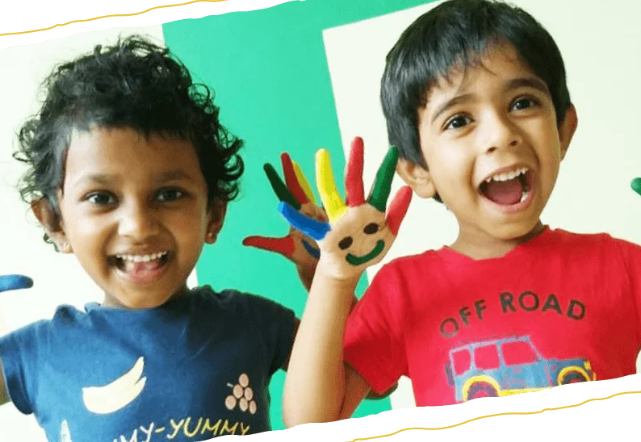
Best Montessori School in Rajajinagar, Bangalore - Bodhi Montessori
Early childhood is an important period for developing emotional awareness, confidence, communication, and social relationships. While academic learning is an important part of preschool education, children also need opportunities to understand their feelings, interact with others, and gradually develop self-control. This is one reason parents researching Montessori schools in Bangalore often explore educational environments that consider children's overall development.
Montessori education provides children with a structured environment where they can make appropriate choices, work independently, communicate with others, and participate in meaningful activities. These experiences can contribute to emotional and social development alongside academic learning.
Understanding Emotional Development
Emotional development involves learning to recognize feelings, communicate needs, manage reactions, and build relationships with others. Young children are still learning how to express emotions and respond to unfamiliar situations.
A supportive classroom can give children opportunities to practice these skills naturally. Teachers can guide children through everyday interactions while providing a calm and predictable environment.
Montessori education can support this process by encouraging independence, respectful communication, and responsibility.
Creating a Sense of Independence
Independence can contribute to a child's developing sense of confidence. When children are given opportunities to complete suitable tasks on their own, they can begin to recognize their abilities.
Simple activities such as organizing materials, completing practical tasks, or selecting an appropriate activity can give children a sense of responsibility.
Montessori classrooms often encourage children to participate actively rather than relying on adults for every step. This gradual independence can help children become more comfortable making choices.
Learning to Make Choices
Children naturally want to make decisions about what they do. A Montessori environment can provide controlled opportunities for choice within clear classroom boundaries.
For example, children may choose from several appropriate activities. They are also expected to use materials correctly and return them after completing their work.
This combination of freedom and responsibility can help children understand that choices have associated responsibilities.
Developing Patience
Patience is an important social and emotional skill. Children may need time to complete an activity, wait for materials, or allow classmates to finish their work.
Montessori classroom routines can provide natural opportunities to practice patience. Children can learn to wait, observe others, and return to an activity when appropriate.
These everyday experiences can gradually help children become more comfortable with delayed responses and shared spaces.
Encouraging Respectful Communication
Communication plays an important role in emotional development. Children need opportunities to express their ideas, ask questions, communicate needs, and listen to others.
Montessori environments can encourage respectful conversations between children and teachers. Classroom interactions can introduce children to concepts such as listening, taking turns, and speaking appropriately.
These communication experiences can become useful as children enter larger social and educational environments.
Learning Through Everyday Social Experiences
Children develop social awareness through regular interactions. Working near classmates, sharing classroom spaces, and participating in group activities can provide opportunities to understand different perspectives.
A Montessori classroom may include children working independently at different activities while sharing a common environment. This allows children to observe one another and learn how to respect different work patterns.
Over time, such experiences can help children become more aware of how their behavior affects others.
Building Confidence Through Practice
Confidence does not develop overnight. Children often become more confident when they have opportunities to practice skills and experience progress.
Montessori activities can be repeated according to a child's needs. A child who initially struggles with a task may become more comfortable after several attempts.
Successfully completing an activity can provide a sense of accomplishment and encourage children to approach future challenges with greater confidence.
Handling Mistakes as Part of Learning
Mistakes are a natural part of learning. Young children need opportunities to understand that making an error does not necessarily mean they should stop trying.
Many Montessori materials are designed to provide children with opportunities to recognize and correct mistakes through the activity itself. This can encourage children to observe what happened and try again.
Learning to respond constructively to mistakes can support persistence and a positive attitude toward challenges.
Developing Responsibility
Responsibility can be introduced through simple classroom routines. Children may be expected to handle materials carefully, complete activities, and return items to their proper places.
These tasks can help children understand that they have responsibilities within a shared environment.
Parents researching Montessori schools in Bangalore can ask how schools introduce responsibility and whether children are encouraged to participate in maintaining the classroom.
The Role of Montessori Educators
Teachers have an important role in supporting children's emotional and social development. Montessori educators observe children's behavior, provide guidance, demonstrate respectful interactions, and maintain classroom expectations.
Rather than immediately solving every difficulty, teachers can sometimes give children opportunities to work through age-appropriate challenges themselves.
At the same time, educators can provide support when a child requires additional guidance or reassurance.
Creating a Calm Learning Environment
The classroom atmosphere can influence how children feel during the school day. A predictable and organized environment can help children understand what is expected of them.
Montessori classrooms are generally structured around clear routines and accessible materials. This organization can help children become familiar with their surroundings and gradually take greater responsibility for their activities.
Parents visiting Montessori schools in Bangalore can observe whether the classroom feels organized, respectful, safe, and appropriate for young learners.
Supporting Individual Differences
Children do not all develop emotional and social skills at the same pace. Some may quickly become comfortable in new environments, while others may need more time.
A child-focused educational approach can recognize these differences and provide appropriate support. Teachers can observe individual behavior and adjust their guidance according to the child's developmental needs.
This individual attention can help children feel understood while gradually encouraging greater independence.
What Parents Can Look For
When evaluating Montessori schools, parents can consider several aspects of the learning environment. They can ask how teachers handle disagreements, encourage communication, support independence, and respond to children's individual needs.
It can also be useful to observe how children interact with teachers and classmates during a school visit.
For families researching Montessori schools in Bangalore, these observations can provide a better understanding of how a school approaches children's overall development.
Explore Bodhi Montessori
Families interested in a Montessori-based approach can explore Bodhi Montessori, which provides a child-focused learning environment designed to encourage independence, exploration, practical learning, communication, and holistic development.
Through meaningful classroom experiences, children can have opportunities to develop foundational skills while becoming more comfortable with learning and social interaction.
For parents exploring Montessori schools in Bangalore, understanding how a school supports emotional, social, practical, and academic development can help them identify an environment that aligns with their child's individual needs.
Contact Address: Bodhi Montessori Schools, 2nd Main, 4th Block, Rajaji Nagar, Bengaluru - 560010, Karnataka, India
Email id: info.littlebodhi@gmail.com
Details
| Category | Education and Learning |
|---|---|
| Location | Bangalore, Karnataka |
| Posted On | Sep 25, 2026 |
When you call, don't forget to mention that you found this ad on PostFreeAds.
Share this ad
Recent Ads
-
 Revitalize Your Smile, Hair, and Skin: Welcome to Cosmos Clinics Hyderabad
-
 Best Hotels in Puri – Hotel Seven Hills Odisha
-
 Kimera Salon Services in Jayanagar – Hair, Beauty & Grooming Bengaluru
-
 Leading Copper Anodes Manufacturer India | Koprex Quality Solutions New Delhi
-
 Unique IAS Study Circle: Best UPSC and MPPSC Coaching in Bhopal Since 1990
-
 Top Engineering Colleges in Punjab - Global Group of Institutes Amritsar